

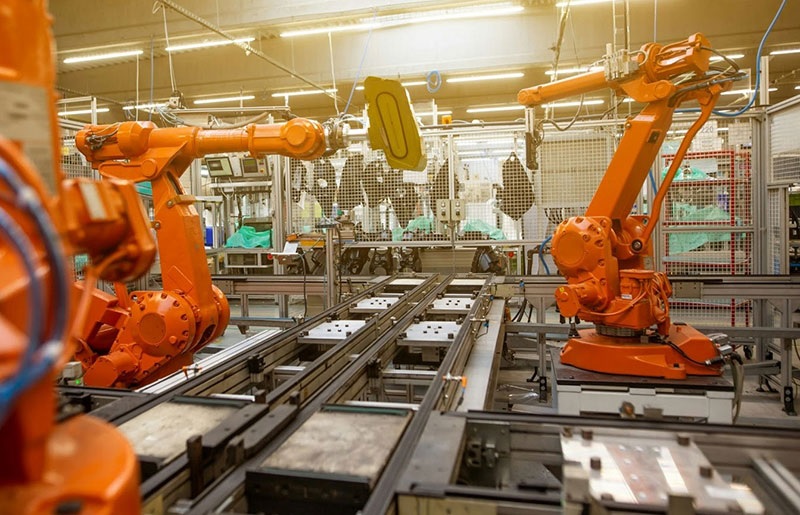
On a busy Thursday afternoon in a mid-sized metal stamping plant, a high-tonnage press suddenly seizes halfway through a rush order for an automotive tier-one supplier. Maintenance technicians pull the housing apart and trace the breakdown to a main bearing that had been running hot for nearly two weeks. Nobody caught it because the machine sounded normal over the ambient noise of the shop floor, and the next scheduled inspection was still ten days away. By the time replacement parts arrive overnight and the press is recalibrated, the plant has lost fourteen hours of production, paid overtime wages across two shifts, and absorbed expedited freight fees to protect a key customer relationship.
Scenes like this used to be accepted as an unavoidable cost of running heavy industrial equipment. Today, that tolerance is fading fast. Tight margins, skilled labor shortages, and unforgiving delivery windows have forced American manufacturers to look much closer at what happens between shift start and shift end. Industrial Internet of Things (IIoT) technology has moved well past conference buzzwords and experimental labs. By connecting machines, tooling, environmental sensors, and enterprise software into a continuous feedback loop, factories are uncovering hidden bottlenecks, preventing costly breakdowns, and squeezing substantially more output from the assets they already own.
Moving Beyond Clipboards and Rearview Metrics
For decades, plant managers operated in a rearview mirror. Operators recorded downtime reasons on paper clipboards at the end of an eight-hour shift, supervisors keyed those notes into spreadsheets the following morning, and leadership reviewed performance trends during weekly production meetings. By the time anyone noticed that Line 4 was running twelve percent slower than standard, thousands of dollars in margin had already vanished.
Manual tracking misses more than just time; it misses nuance. Major breakdowns are easy to log, yet the largest drain on Overall Equipment Effectiveness (OEE) in many factories comes from recurring micro-stoppages and slow cycles. A conveyor jamming for forty seconds every hour or a packaging sealer pausing briefly to clear film misfeeds rarely makes it onto a hand-written shift log. Over a quarter, however, those quiet interruptions add up to dozens of lost production hours.
Industrial IoT replaces delayed estimates with live, machine-generated truth. Sensors mounted directly on production assets stream granular data on cycle times, spindle loads, temperatures, vibration signatures, and power draw straight into centralized monitoring platforms. Instead of debating why last Tuesday missed target, supervisors can see a line drifting out of specification while there is still time to intervene.
Core Ways Industrial IoT Drives Measurable Plant Efficiency
The financial case for connected manufacturing rarely hinges on a single flashy breakthrough. Rather, efficiency gains stack across maintenance, throughput, quality, energy use, and material handling.
Shifting From Preventive to Predictive Maintenance
Traditional maintenance programs force plants into an awkward tradeoff. Run equipment until it fails, and you suffer catastrophic unplanned downtime. Service equipment on a strict calendar schedule, and your technicians waste hours replacing bearings, belts, and filters that still have months of useful life remaining.
IIoT breaks that cycle by enabling condition-based and predictive maintenance. Wireless vibration sensors, acoustic monitors, ultrasonic detectors, and inline oil-quality analyzers track subtle physical changes long before human senses can detect them. When a motor’s harmonic vibration profile shifts or a hydraulic pump’s operating temperature climbs above its historical baseline, the system flags the anomaly automatically.
Catching wear days or weeks in advance turns emergency repairs into planned interventions. Maintenance teams can order the exact replacement part without paying overnight shipping premiums, schedule the fix during a planned weekend changeover, and keep skilled technicians focused on high-value reliability work rather than constant firefighting.
Real-Time Production Visibility and Bottleneck Elimination
When every press, injection molder, CNC cell, and packaging unit reports its live operating state, plant managers gain an unobstructed view of actual throughput. Modern IIoT dashboards break down machine availability, performance speed, and output quality automatically across shifts, product runs, and individual operators.
This visibility makes hidden constraints obvious. A factory might assume it needs to buy a second machining center to meet rising demand, only to discover through sensor data that its existing equipment sits idle twenty-two percent of the shift waiting on material staging or slow die changeovers. Addressing those scheduling and staging gaps often unlocks double-digit capacity increases without spending a dime on new heavy capital equipment.
Inline Quality Control and Lower Scrap Rates
In discrete and process manufacturing alike, discovering a quality defect at final inspection means you have already paid for raw materials, machine time, energy, and labor to produce scrap. Connected sensors allow plants to control quality during production rather than sorting bad parts afterward.
Consider a plastics manufacturer running high-precision medical housings. IIoT sensors monitoring cavity pressure, melt temperature, and cooling water flow inside the injection mold can detect slight process drift within seconds. Paired with automated optical inspection cameras downstream, the system can alert operators immediately or even pause the press before a minor temperature swing ruins an entire batch. Lower scrap rates translate directly into stronger gross margins, reduced rework labor, and fewer customer chargebacks.
Granular Energy Management and Peak Demand Control
Electricity and natural gas represent major operating expenses for heavy industry, yet most factories still treat energy as a lump-sum utility bill received once a month. Installing IoT sub-meters on individual production lines, industrial ovens, chillers, and air compressors changes energy from a fixed overhead cost into a controllable variable.
Compressed air systems offer a classic example. Leaks in plant air lines routinely waste twenty to thirty percent of compressor output, often running nonstop over idle weekends. Flow and pressure sensors pinpoint abnormal drops instantly so maintenance can patch leaks right away. Beyond waste reduction, real-time load monitoring helps plants stagger the startup of energy-intensive equipment, avoiding brief spikes that trigger punitive utility peak-demand charges for the entire billing cycle.
Smarter Material Flow and Inventory Precision
Operational efficiency collapses quickly when a high-speed production line grinds to a halt waiting for a pallet of fasteners or packaging cartons. At the same time, stockpiling excessive buffer inventory ties up working capital and crowds warehouse aisles.
Using RFID portals, ultra-wideband asset tags, and weight-sensing smart bins, IIoT links physical shop-floor consumption directly to enterprise resource planning software. As components are pulled at a workstation, inventory counts update automatically and trigger replenishment signals to the warehouse or external suppliers. Forklift operators spend less time hunting for misplaced work-in-progress pallets, cycle counts take a fraction of the usual labor, and purchasing teams base reorders on live consumption rates instead of rough forecasts.
Connecting Legacy Machinery Without Ripping and Replacing
A common misconception among mid-market manufacturers is that IIoT requires building a brand-new smart factory filled with modern robotics. In reality, the average American plant runs a patchwork of equipment spanning decades. A facility might operate a three-year-old automated laser cutter right next to a forty-year-old mechanical press that still runs reliably and has long since been paid off.
Fortunately, modern IIoT architectures are built specifically for brownfield environments. Rather than replacing proven machinery, engineers attach non-invasive external sensors, such as clamp-on current transducers, magnetic accelerometers, and optical photo-eyes, directly to legacy frames. Industrial edge gateways then translate signals from older programmable logic controllers and standalone sensors into standardized protocols like OPC UA or MQTT.
Edge computing plays an equally important role on the modern shop floor. Processing high-frequency vibration or machine-vision data locally on an edge device next to the equipment keeps response times measured in milliseconds, avoids clogging corporate internet bandwidth with raw sensor noise, and ensures critical alerts continue functioning even if cloud connectivity drops briefly.
Practical Hurdles That Still Stall IIoT Rollouts
Even with lower hardware costs and easier retrofit options, plenty of industrial IoT initiatives fail to deliver meaningful financial returns. The obstacles are rarely purely technical.
One widespread trap is pilot purgatory. A company installs sensors on two machines, builds an impressive wall-mounted dashboard for executive tours, and stops there because the data never connects to daily workflows. Telemetry creates zero efficiency on its own unless it triggers concrete action on the floor. If a bearing heat warning appears on a screen that nobody monitors, or fails to generate a work order inside the plant’s computerized maintenance management system, the bearing will still fail.
Friction between operational technology (OT) and corporate IT teams also slows progress. Connecting historically isolated factory machinery to broader networks introduces real cybersecurity risks that cannot be ignored. Successful rollouts require IT security specialists and controls engineers to collaborate early on network segmentation, read-only data diodes, encrypted gateways, and strict access controls so plant uptime is never jeopardized.
Finally, cultural resistance matters more than many executives anticipate. When sensors appear on machines without clear communication, veteran operators naturally suspect leadership is installing digital surveillance to micromanage break times. Involving line leads and maintenance technicians during sensor selection and dashboard design flips that dynamic. When workers see that connected tools spare them tedious paperwork and eliminate frustrating recurring jams, adoption accelerates naturally.
Building an IIoT Strategy That Pays for Itself
Manufacturers seeing the strongest returns from Industrial IoT approach deployment with disciplined operational focus rather than chasing technology for its own sake.
Start by isolating one expensive, measurable pain point. That might be chronic unplanned stops on your primary bottleneck line, excessive scrap during product changeovers, or runaway electricity costs in a heat-treating department. Establish an honest baseline metric before installing a single sensor so you can prove actual payback within six to twelve months.
Keep the initial architecture modular and open. Avoid proprietary closed ecosystems that lock your facility into one vendor’s hardware and charge steep fees to export your own data. Prioritize platforms that integrate smoothly with the ERP, manufacturing execution, and maintenance software your team already relies on every day. Once a focused pilot proves reliable savings and wins buy-in from the crew running the equipment, standardize that deployment playbook and roll it systematically across adjacent lines and sister facilities.
Manufacturing competitiveness has always favored plants that see problems clearly and eliminate waste faster than the competition. Industrial IoT simply gives experienced operators, engineers, and plant leaders far sharper visibility into the physical heartbeat of their operations. When paired with sound maintenance discipline and clear accountability on the floor, connected machinery stops being a futuristic concept and becomes a steady, measurable engine for higher throughput, tighter quality, and healthier margins.