

Selecting the right service model is one of the most critical structural decisions an enterprise can make. Whether designing cloud computing infrastructure, organizing customer support operations, or establishing supply chain logistics, the choice between centralized and distributed models dictates how resources are allocated, how data flows, and how resilient an organization remains under pressure.
As technical ecosystems grow more complex and global user bases demand near-instant responses, understanding the trade-offs between centralized and distributed frameworks is essential. Both models offer distinct advantages and severe vulnerabilities, making the ideal selection heavily dependent on specific business goals, regulatory constraints, and technical requirements.
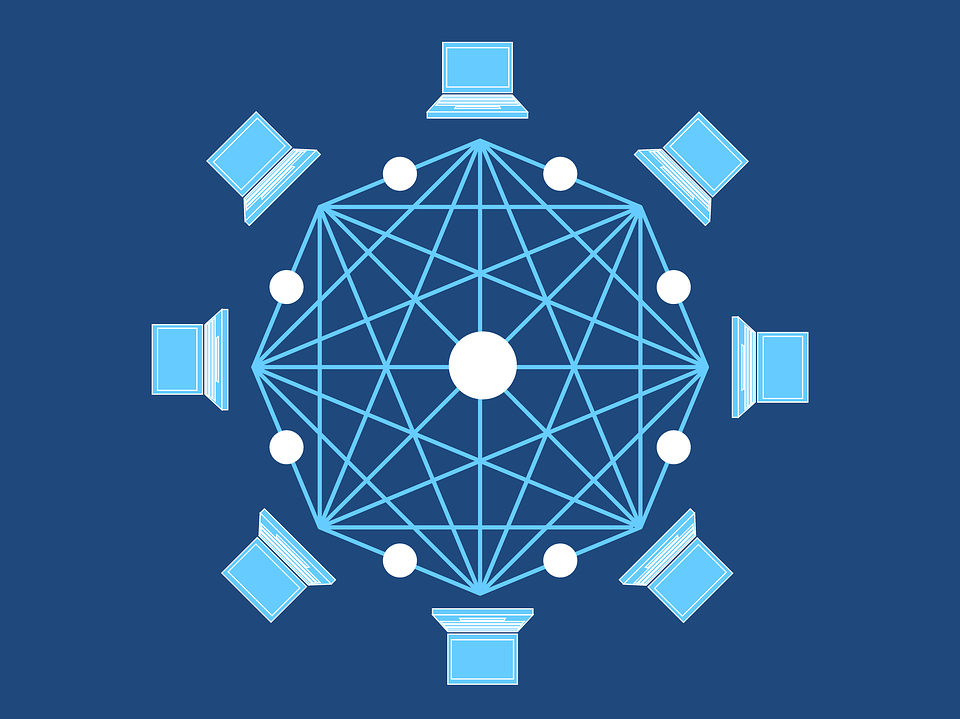
The diagram above illustrates how node connections shift across different architectural layouts. Centralized systems rely on a single primary hub, whereas distributed networks spread responsibility across a interconnected web of independent nodes.
Defining Centralized Service Models
A centralized service model operates around a single, primary point of control and processing. In this configuration, all client requests, data routing, administrative commands, and resource management pass through a central hub or a unified cluster of servers located in one physical or virtual location.
Historically, centralization has been the default approach for enterprise IT and organizational management. By consolidating resources under one administrative umbrella, companies maintain tight authority over system behavior, security protocols, and operational workflows.
Key Characteristics of Centralized Models
-
Single Hub Architecture: All incoming traffic and request processing converge on a core hub before being handled or redirected.
-
Unified Governance: System rules, software updates, access permissions, and administrative changes are applied universally from the central management point.
-
Shared Resource Pool: Hardware, memory, databases, and personnel are aggregated in one primary environment to maximize efficiency.
-
Linear Communication Paths: Requests move directly from the client or edge node to the central server and back, eliminating complex inter-node routing logic.
Primary Advantages of Centralization
Centralized systems excel in simplicity and administrative efficiency. Because every asset and data record resides in a single, predictable location, monitoring system performance and applying software updates is straightforward.
-
Simplified Management: Systems administrators only need to configure, patch, and maintain a core environment rather than managing hundreds of dispersed nodes.
-
Consistent Data Integrity: Having a single authoritative data source eliminates synchronization delays, race conditions, and data divergence across different operational sites.
-
Cost Efficiency at Baseline Scale: For smaller or medium-sized operations, hosting resources centrally avoids the financial burden of purchasing and running multiple infrastructure setups.
-
Straightforward Security Policies: Securing a consolidated parameter with a single firewall and strict access controls is less complex than securing multiple distributed endpoints.
Main Vulnerabilities of Centralization
Despite these benefits, centralized architectures introduce systemic risks that become increasingly problematic as user demands scale up.
-
Single Point of Failure: If the primary central hub experiences hardware failure, power loss, or a targeted cyberattack, the entire service goes offline for all users globally.
-
Performance Bottlenecks: Heavy traffic surges can overwhelm the central server, leading to severe performance degradation, slow response times, or complete crashes.
-
High Latency for Remote Users: Users who are geographically distant from the central data hub will experience higher network latency, reducing overall user satisfaction.
-
Scaling Limitations: Scaling a centralized system requires vertical scaling, which means upgrading to larger, more expensive hardware. Vertical scaling eventually reaches physical and financial limits.
Defining Distributed Service Models
A distributed service model breaks down monolithic operations into multiple autonomous nodes that communicate and coordinate across a network. Instead of relying on a single master node, tasks are spread across multiple processing hubs, data centers, or regional branch offices.
In a fully distributed service environment, individual nodes can accept requests, process data locally, and sync state changes with the broader network asynchronously or synchronously. This model forms the foundation of modern cloud-native architectures, microservices, edge computing, and global delivery networks.
Key Characteristics of Distributed Models
-
Node Independence: Individual servers or regional teams possess local operational autonomy and can function even if another node goes offline.
-
Distributed Resource Ownership: Compute power, storage capacity, and administrative duties are shared across multiple physical or geographical zones.
-
Inter-Node Mesh Communication: Nodes constantly exchange status updates, replicate data, and load-balance requests directly among themselves.
-
Geographic Proximity: Service endpoints are situated closer to end users, reducing the physical distance data must travel.
Primary Advantages of Distribution
Distributed architecture is designed for high availability, massive scale, and fast performance across widespread geographical areas.
-
High Availability and Fault Tolerance: System failures are isolated to specific nodes. If one server or region fails, traffic automatically reroutes to remaining active nodes without total service interruption.
-
Low Latency and Faster Processing: By serving content and processing requests near the end user, distributed networks dramatically decrease round-trip ping time and page load speeds.
-
Horizontal Scalability: Capacity can be expanded almost limitlessly by adding new commodity hardware nodes to the existing network as demand grows.
-
Localized Compliance and Tailoring: Organizations can adapt regional nodes to meet specific local regulations, data sovereignty laws, or regional language requirements.
Main Vulnerabilities of Distribution
While offering exceptional resilience, distributed systems introduce significant technical and operational complexity.
-
Complex Management and Monitoring: Tracking performance, debugging errors, and coordinating software deployment across dozens or hundreds of distributed nodes requires advanced tooling.
-
Data Consistency Challenges: Keeping data perfectly synchronized across multiple nodes is difficult, often forcing architects to trade immediate consistency for overall system availability.
-
Expanded Attack Surface: Every active node, connection link, and network endpoint represents a potential entry point for unauthorized access or security breaches.
-
Higher Network Overhead: Continuous inter-node messaging, heartbeats, and state replication consume bandwidth and can create network congestion.
Key Core Differences Across Critical Operations
To choose between these two paradigms, organizations must evaluate how each model performs across essential enterprise operational metrics.
Operational Control and Decision Making
Centralized models concentrate authority at the top or center. Changes in configuration, security updates, or policy decisions flow downward smoothly. This guarantees uniformity across the entire enterprise.
In contrast, distributed models distribute decision-making or processing capabilities to individual branches, microservices, or nodes. While this empowers regional setups to adapt quickly to local conditions, it increases the risk of fragmented operations and inconsistent user experiences if strict orchestration frameworks are not established.
System Scalability and Growth Dynamics
Scaling a centralized framework requires vertical expansion, such as adding stronger CPUs, additional RAM, or faster drives to the main server. Vertical scaling becomes exponentially expensive as hardware reaches top-tier specifications and eventually hits a hard technological ceiling.
Distributed frameworks rely on horizontal scaling, which means adding additional standard servers or cloud instances to the network. This approach provides virtually infinite scalability, allowing systems to grow smoothly alongside user adoption without requiring hardware overhauls.
Fault Tolerance and Business Continuity
Fault tolerance represents one of the starkest divides between the two models. Centralized systems operate with high inherent vulnerability; an unexpected outage at the central site halts operations across the entire organization.
Distributed service models are specifically engineered for fault isolation. The system as a whole survives individual node crashes through automated failover protocols, ensuring continuous business operations even during infrastructure disruptions.
Cost Structures and Overhead Management
From a financial perspective, centralized service models usually feature lower initial setup costs and manageable ongoing operational expenditure for lower-volume operations. Maintenance requires fewer specialized engineers because the footprint is contained.
Distributed systems demand higher upfront capital investment, sophisticated software licensing, and specialized skills in distributed computing, network engineering, and container orchestration. However, as transaction volumes rise to enterprise levels, distributed models become more cost-effective per unit of work due to efficient resource utilization and pay-as-you-grow flexibility.
Security, Compliance, and Data Governance
Security implementation strategies differ radically between centralized and distributed frameworks.
-
Centralized Security: Focuses on defending a single parameter with heavy firewalls, strict intrusion detection systems, and consolidated log auditing. While easier to audit, a single security compromise grants attackers access to the entire core repository.
-
Distributed Security: Requires a zero-trust approach where every node must authenticate and encrypt all internal communication. While a breach at one node remains contained, maintaining compliance and managing cryptographical keys across many nodes increases operational effort.
Hybrid Approaches: The Middle Ground
Recognizing that neither purely centralized nor purely distributed models fit every operational scenario, many modern enterprises deploy hybrid architectures.
A standard hybrid configuration utilizes centralized management for critical administrative tasks while distributing operational workloads to the network edge. For example, a global retail platform may centralize user accounts, financial auditing, and corporate inventory management while deploying distributed regional edge nodes to deliver fast web pages, process local shopping carts, and cache media files.
By establishing centralized policy enforcement alongside distributed operational execution, businesses achieve a balance between governance control and performance responsiveness.
How to Choose the Right Model for Your Organization
Selecting the appropriate service model requires a careful analysis of your technical demands, organizational structure, and long-term business trajectory.
Factors Favoring a Centralized Model
-
Low to Moderate User Base: Your active user count is predictable and concentrated within a specific geographical area.
-
Strict Immediate Data Consistency: Your domain requires absolute real-time data consistency, such as core ledger accounting systems, where temporary data conflicts cannot be tolerated.
-
Limited IT Engineering Budget: Your operational staff is small and lacks specialized experience in managing distributed software deployments.
-
Simplified Regulatory Audit Needs: Keeping all sensitive records inside one well-defined physical data center simplifies compliance reporting.
Factors Favoring a Distributed Model
-
Global or Widespread Audience: Users access your service from multiple geographical regions and demand fast response times.
-
Mission-Critical Uptime Requirements: Downtime directly causes massive revenue loss or safety risks, making fault isolation mandatory.
-
Rapidly Growing Demand: System throughput and storage requirements are expanding rapidly, necessitating horizontal capacity expansion.
-
Complex, Modular Workloads: Applications are structured naturally into independent services or microservices that can be updated separately.
Frequently Asked Questions
What is the primary difference between decentralized and distributed service models?
A decentralized model removes a single central controlling authority and redistributes management power among several key sub-centers or regional hubs. A distributed model focuses on the physical or logical separation of processing hardware across a network, where no single location handles all computing tasks regardless of how administrative authority is structured.
How does latency differ between centralized and distributed systems for international users?
Centralized systems force all network requests to travel to a single physical location, resulting in high latency for users located far from that central data hub. Distributed systems host application services and cached content on regional nodes physically close to end users, significantly reducing network transmission distance and response latency.
Which service model makes regulatory compliance simpler under data privacy frameworks?
Centralized models simplify compliance auditing because all personal data resides in one identifiable data center with unified security controls. Distributed models require careful configuration to prevent personal data from accidentally migrating into regions where privacy laws conflict with compliance standards.
How do distributed service models handle data sync during a network disconnection?
Distributed systems use consensus algorithms and asynchronous data replication strategies to handle network disruptions. Nodes store changes locally or operate under eventual consistency rules, automatically updating and reconciling data across the broader network once connection is restored.
What are the main skills needed to maintain a distributed service architecture?
Maintaining a distributed architecture requires expertise in distributed systems theory, container orchestration, microservices management, automated infrastructure scripting, and continuous delivery pipelines. Engineers must also understand dynamic load balancing, network routing protocols, and advanced distributed monitoring tools.
Why do centralized service models often cost less during initial deployment?
Centralized models require simpler infrastructure design, fewer physical servers, and straightforward database structures. Because developers do not need to build complex node communication, distributed lock mechanisms, or fault recovery logic into the code base, initial development and deployment costs remain comparatively lower.
Can an enterprise migrate from a centralized service model to a distributed model over time?
Yes, organizations frequently transition through an incremental strategy known as strangler patterns or modular decomposition. By gradually extracting individual features from a monolithic centralized core and refactoring them into distributed microservices or cloud nodes, companies can modernize their architecture without stopping ongoing business operations.